Frequently Asked Questions
The following comes from Fr. Andreas Blom, Rector of Holy Theophany Orthodox Church in Colorado Springs, CO.
This brief list of Frequently Asked Questions about the Orthodox Faith only touches upon a number of more involved issues. If you would like to find out more, we would welcome your inquiries, please contact Fr. Nicholas.
Q: So you are “Eastern Orthodox”?
A: Yes, except that we as predominantly Americans are quite “Western.” Ironically it was actually from the West that the “Eastern Orthodox Church” came to these shores some two hundred years ago – through Alaska and California. Since that time Orthodox Christianity has been flourishing in the Americas. Also worth noting is that original Christianity was not a “Western religion” at all, but emerged from the near East – Palestine and Asia Minor.
Q: Are you “Greek Orthodox” or “Russian Orthodox”?
A: The Orthodox Church is One Church. Currently, however, Church organization in North America is divided among several different “jurisdictions,” or governing bodies of varying national origin within the One Church.
The doctrine and worship of each jurisdiction and parish is the same, though in some, languages other than English continue to be used in the services. Russian, Greek, Serbian, Antiochian – it is all in reality one and the same Orthodox Church.Our particular parish is part of the Orthodox Church in America (OCA), which historically emerged from the Russian Orthodox Church.
Q: I only know of two kinds of Christians, Protestant and Catholic. How can you claim you are neither?
A: From the Orthodox point of view, Roman Catholicism is an early medieval modification of the original Orthodoxy of the Church in Western Europe, and Protestantism is a later attempt to return to the original Faith. To our way of thinking, however, the Reformation did not go far enough.
We respectfully differ with Roman Catholicism on the questions of papal authority, the nature of the Church, the approach to salvation, and a number of other consequent issues. Historically, the Orthodox Church is both “pre-Protestant” and “pre-Roman Catholic” in the sense that many modern Roman Catholic teachings were developed much later in Christian history.
The word catholic is a Greek word meaning “having the fulness.” We do consider ourselves “Catholic” in that sense of the word, that is, as proclaiming and practicing “the Whole Faith.” In fact, we proclaim our Church to be “One, Holy, Catholic and Apostolic.”
Protestants can often relate to Orthodoxy’s emphasis on a personal experience of faith and on the Holy Scriptures. Roman Catholics easily identify with Orthodoxy’s rich liturgical worship and sacramental life. Roman Catholic visitors often comment, “in lots of ways your Liturgy reminds me of how our old High Mass used to be.”
Many of the “polarities” between Protestants and the Roman Communion (i.e., “Word versus Sacrament,” “Faith versus Works” or “Symbol versus Reality”) have never arisen in the Orthodox Church.
Q: Why do you call yourselves “Orthodox”?
A: The word orthodox was coined by the ancient Christian Fathers of the Church, the name traditionally given to the Christian writers in the first centuries of Christian history. Orthodox is a combination of two Greek words, orthos and doxa.
Orthos means “straight” or “correct.” Doxa means at one and the same time “glory,” “worship” and “doctrine.” So the word orthodox signifies both “proper worship” and “correct doctrine.”
The Orthodox Church today is the same as the undivided Church in ancient times. The Protestant Reformer Martin Luther once remarked that he believed the pure Faith of primitive Christianity is to be found in the Orthodox Church.
Q: Are you Conservative or Liberal?
A: In current usage, the words “conservative” and “liberal” indicate a variety of often-conflicting viewpoints. Usually, we don’t really fit either category very well, as the Orthodox Faith is a lot older than the American “culture war.”
On seven major occasions during the first millennium of Christianity, the leaders of the worldwide Church; from Britain to Ethiopia, from Spain and Italy to Arabia and Asia, met to settle crucial issues of Faith. The Orthodox Church is highly “conservative” in the sense that we have not added to or subtracted from any of the teachings of those Ecumenical Councils. But that very “conservatism” often makes us “liberal” in certain questions of civil liberties, social justice and peace. We are very conservative, or rather traditional, in our liturgical worship.
Q: Do you follow the Bible or Tradition?
A: A good short answer to this question is “Yes!” The question implies precisely a kind of polarity (i.e., “Bible versus Tradition”) which is not part of the Orthodox Christian worldview.
“Tradition,” or in Greek paradosis, is used very often in the New Testament both as a verb and a noun. (See I Corinthians 11:23, where literally translating the original Greek, Paul says “for I received of the Lord that which I also have traditioned to you …” See also I Corinthians 11:2, and II Thessalonians 2:15 and 3:6.)
Tradition means “that which is handed over.” The New Testament carefully distinguishes between “traditions of men” and Holy Tradition, which is the Faith handed over to us by Christ in the Holy Spirit. That same Faith was believed and practiced several decades before the New Testament Scriptures were set down in writing and given canonical (i.e., official) status. We experience the Tradition as timeless and ever timely, ancient and ever new.
We distinguish between Holy Tradition (“with a capital T”) which is the Faith/Practice of the Undivided Church, and traditions (“with a little t”) which are local or national customs. Due to changing circumstances, sometimes cherished customs must be altered or respectfully laid aside for the sake of Holy Tradition.
The New Testament Scriptures are the primary written witness to Holy Tradition. Orthodox Christians therefore believe that the Bible, as the inspired Holy Scriptures, is the heart of the Tradition. In the New Testament all basic Orthodox doctrine and sacramental practice is either specifically set forth, or alluded to as already a practice of the Church in the first century A.D.
Holy Tradition is also witnessed to by the decisions of the Ecumenical Councils, the Nicene Creed, the writings of the Fathers of the Church, by the liturgical worship and iconography of the Church, and in the lives of the Saints.
Q: Are you saying that your elaborate worship is based on the Bible? I’d like to know where.
A: The Christian Church learned to worship in the Jewish Temple and in the Synagogues. Again and again the New Testament tells us that Jesus, Paul and the others worshipped regularly in Jewish houses of worship. (See for instance Luke 4:16; Acts 3:1; Acts 17:1-2.)
We know from archaeology, and from modern Jewish practice, that Synagogue worship was and is highly liturgical, i.e., communal, organized, ceremonial, and done decently and in order (I Corinthians 14:40).
Many Biblical scholars have shown, very convincingly, that when John describes heavenly worship in the book of Revelation, he is following the Hebrew custom of portraying Heaven’s worship in terms of earthly liturgy. The writers of the Bible thought of earthly worship as a “shadow” or “type” of Heaven’s liturgy. (See Isaiah 6, Hebrews 8:4-6.) In other words, a biblical passage such as the fourth and fifth chapters of the Book of Revelation gives us an accurate picture of a very early Christian worship service. That service very much resembles traditional Orthodox worship.
Orthodox worship is also very Scriptural in the sense that it is a kaleidoscopic mosaic of Scriptural quotations, paraphrases, references, and allusions. It is, quite literally, “to pray the Bible!”
Apart from the fact that we worship in English, and sometimes use modern harmonies with our ancient melodies, our services are basically identical to those of the early Christian Church. For that reason our worship sometimes seems a bit “strange” to Protestant and Roman Catholic visitors. We often hear, “Your services are just beautiful, and the music is outstanding, but they feel somewhat different.”
Q: It sounds as if you are rigidly bound by your Tradition. You mean it can’t change?
A: Holy Tradition as a set of basic principles outlining our worldview is a constant. Its very constancy, however, sometimes will even demand change. As a simple instance of this, by Tradition our worship is to be celebrated in a language understood by the worshipping congregation. This means that Tradition, not infrequently, requires a change in liturgical language. As another instance, the Tradition also requires constant change in ourselves as, through the guidance of the Holy Spirit, we grow spiritually and respond ever more fully to the call of God in Jesus Christ.
Holy Tradition has been defined as “the life of the Church in the Holy Spirit.” As such it is dynamic and adapting, while at the same time always remaining the same Divine life. The life of the Church does not change to satisfy our whims and personal preferences. It is there to change us, and to bring healing to our tarnished soul.
Q: Do you have the Virgin Mary, Saints, prayer for the dead, and confession “like the Catholics?”
A: There are points of contact between Orthodox and Roman Catholic belief on these issues, and modern Roman Catholic practice. After all, we shared more or less a thousand years of history. But there are also significant differences. To discuss them in depth is beyond the scope of this short summary. The following is a brief statement of the Orthodox point of view.
1. We venerate the Virgin Mary as “more honorable than the Cherubim and more glorious beyond compare than the Seraphim” because she is the woman who gave birth to Jesus Christ, Who is the Word of God, Who is God. Therefore we often refer to her as Theotokos, which is Greek for “birth-giver of God.” We call her blessed and think of her as the greatest of missionaries, for her unique mission was to deliver the Word of God to the world. We do not see her as an exception of the human race, but as an example for all of us to follow. (See Luke 1:43, 48: John 1:1, 14; Galatians 4:4.)
2. We likewise honor the other great men and women in the life and history of the Church – patriarchs, prophets, apostles, preachers, evangelists, martyrs, confessors and ascetics – who committed their lives so completely to the Lord, as models of what it means to be fully and deeply Christian. These men and women are called “saints”; a word deriving from the ancient Latin word meaning “holy.” For example, we believe that men like the apostle Paul – in their devotion to Christ – led holy lives and that we are indeed to be imitators of him, as he was of Christ.
3. We also believe that in the risen Christ, prayer transcends the barrier between life and death and that those who have gone before us pray for us, as we remember them in our prayers. In Christ, we are one family. (See Hebrews 12:1; II Timothy 1:16-18.)
4. As indicated in John 20:21-23, and James 5:14-16, we practice sacramental confession and absolution of sins. The presbyter (priest) is the sacramental agent of Christ (as were the Apostles) and the witness of the confession. The priest sacramentally conveys Christ’s forgiveness, not his own.
Q: Why do you have all those paintings in your church?
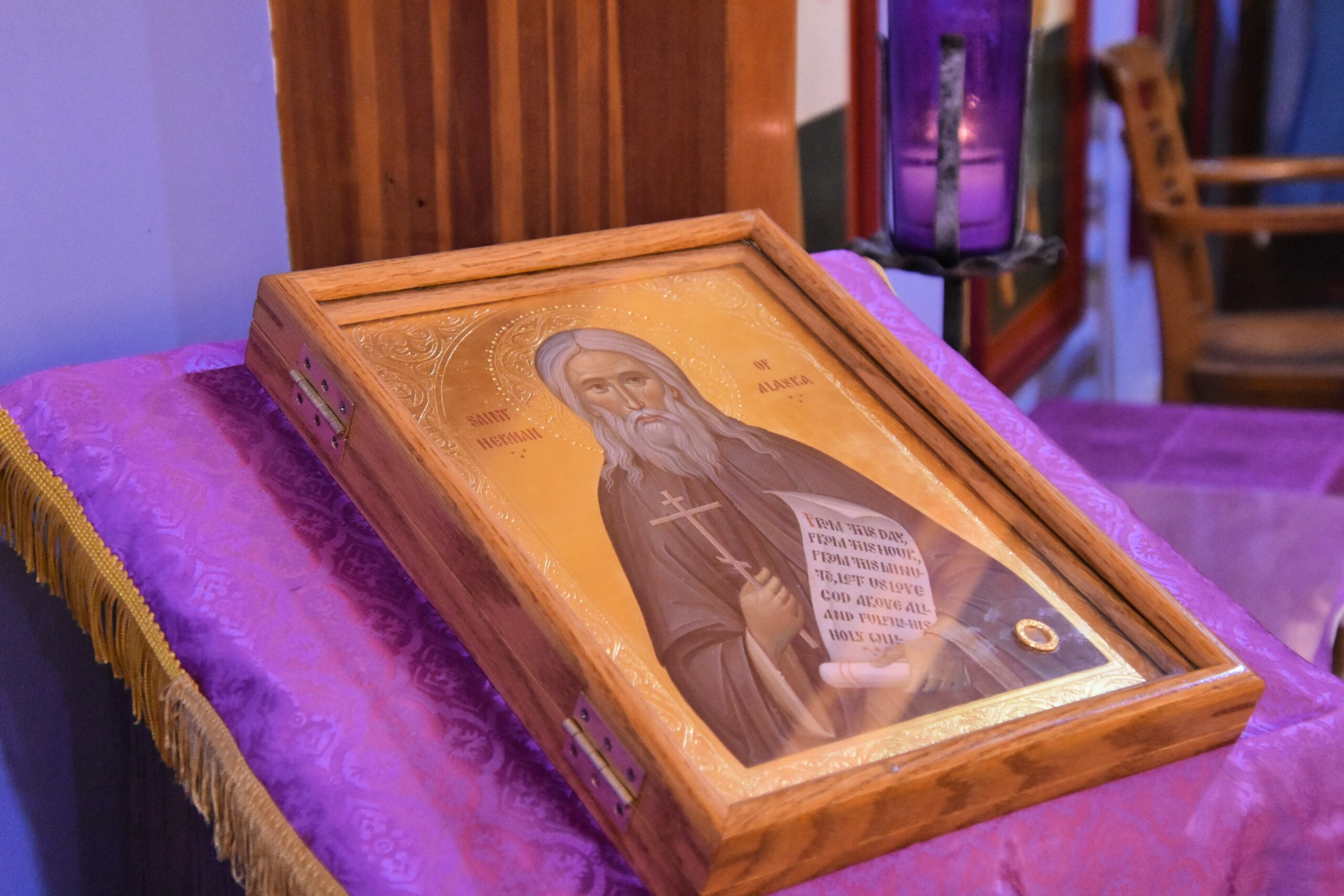
A: Icons are not paintings in the sense of naturalistic representations. They are rather stylized and symbolic expressions of deified humanity. (See II Peter 1:4; I John 3:2.) For the Orthodox, icons are sacramental signs of God’s “Cloud of Witnesses” (Hebrews 12:1). We do not worship icons. Rather, we experience icons as Windows into Heaven. Like the Bible, icons are earthly points of contact with transcendent Reality.
In the original Greek of the New Testament, Christ is frequently called the icon (image) of God the Father. (See II Corinthians 4:4; Colossians 1:15; Hebrews 1:3.) Man himself was originally created to be the icon of God (Genesis 1:27). You can read more about the use of icons in the Church here.
Q: Why do you not practice “Open Communion?”
A: In the strictest sense the Communion of the Orthodox Church is open to all repentant believers. That means we are glad to receive new members in the Orthodox Church. The Orthodox concept of “Communion” is totally holistic, and radically different from that of most other Christian groups. We do not separate the idea of “Holy Communion” from “Being in Communion,” “Full Communion,” “Inter-Communion” and total “Communion in the Faith.”
In the Orthodox Church therefore, to receive Holy Communion, or any other Sacrament (Mystery), is taken to be a declaration of total commitment to the Orthodox Faith. While we warmly welcome visitors to our services, it is understood that only those communicant members of the Orthodox Church who are prepared by recent confession, prayer and fasting will approach the Holy Mysteries.
Q: Don’t you think your old-fashioned doctrine and worship a bit irrelevant to modern American life?
A: We believe that God quite literally does exist. He is not a figment of pious fiction or wishful thinking. God and His will is therefore our “top priority.” We believe that the Word of God literally became Incarnate as Jesus of Nazareth. We believe the Lord Jesus literally rose from the dead in a real though transfigured and glorified physical body. We also believe that life apart from God is hollow and meaningless. Being “relevant” should not be our concern – being holy should be.
However, it is our experience that our sacred Liturgy, the ancient Christian teaching about God and the meaning of human life, are just as relevant today as yesterday. These define our basic values. We know the whole ancient Christian Faith as that which makes more sense than anything else in this world of constant change, confusion and conflict. And we know from the experience of the Saints that the services and the mystical life of the Church brings healing to the depth of the human soul.
We believe that the purpose of human life is for man to become partakers of the divine nature through the grace of the Holy Spirit; in prayer (both at home and in Church), sacrament, reading the Scriptures, fasting, self-discipline, and active love for others. All other human projects and purposes, however noble and important, remain secondary to that which gives ultimate meaning to our human existence.
Q: Can you share some facts about Orthodoxy?
• There are some 250 million Orthodox Christians in the world.
• Most Christians in Greece, Romania, Bulgaria and Serbia, Russia and Ukraine are Orthodox.
• Three million Americans are Orthodox Christians.
• According to the Encyclopedia Britannica, the number of Orthodox Christians in the United States grew by 5.8% a year from 1990-1995, making Orthodoxy proportionally the fastest growing faith in America. In the years 2005-2010 the attendance growth in Orthodox churches increased by 18%!
• The heaviest concentrations of Orthodox in America are in Alaska, Pennsylvania, New Jersey, New York, and Ohio.
• Organized Orthodox Church life first came to America in 1794 with missionaries from Russia who came to Alaska.
• Centuries of vigorous Orthodox missionary activity across 12 times zones in northern Europe and Asia was halted by the Communists after the Soviet Revolution in 1917.
• Orthodox missions are increasingly active worldwide, notably in Central Africa, Japan, Korea and many other parts of the world.
The text above is an adaptation from Fr. Steven Tsichlis at St. Paul’s Greek Orthodox Church.
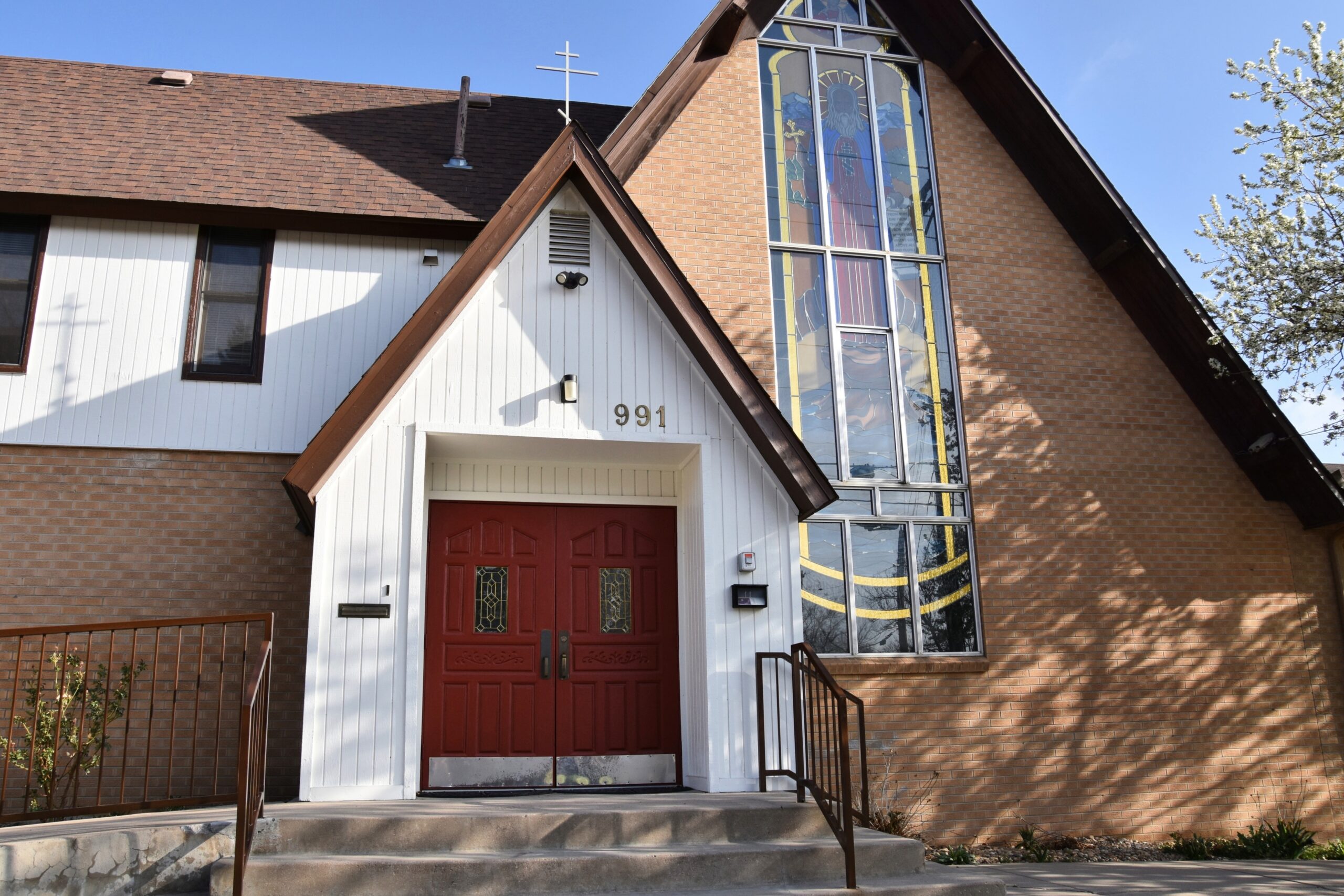
The best way to get to know us is to "Come and See."
We encourage you to spend a "month of Sundays" with us. And if you have any questions about visiting our parish or about Orthodox beliefs, you are welcome to contact our priest, Fr. Nicholas Johnson. He would be more than happy to answer your questions.
Other Important Questions
Q: How do I join the Orthodox Church?
Note: The following comes from Fr. Andres Blom, Rector of Archangel Gabriel Orthodox Church, Ashland OR.
A: The process of becoming an Orthodox Christian is very similar to the process of getting married as it involves the same basic movements of courtship, engagement and marriage. Just as is the case in marriage, this beautiful process is deeply personal.
Outlined below is a typical process of becoming a Christian for someone who is an adult. (Infants and younger children often follow a different process, especially if they are born to Orthodox parents.
1. The Period of Inquiry
Often the first experience of the Church is at a church service, by researching Orthodoxy online, or in a conversation with a friend who is Orthodox. If these initial interactions are blessed, a more serious process of inquiry naturally follows in which the person is referred to as an inquirer or a seeker.
2. The Catechumanate
After beginning as an inquirer and then determining with their priest that it is appropriate for them, one can then become a catechumen and begin formal preparation for being received into the Orthodox Christian Church.
“Catechumen” is someone who is preparing for baptism in the Church. In the ancient Church, the catechumenate, or time during which one is a catechumen, often lasted for as much as three years and included not only prayerful attendance in the divine services but also catechesis, or the formal instruction from a teacher (bishop, priest, or catechist).
Catechetical instruction in Orthodoxy in America does not typically last the three years which was common in the time of St. John Chrysostom, but now ranges from six months to a year, depending on the practice of the bishop, his jurisdiction, and the level of spiritual maturity of the catechumen. Local parish priests typically oversee the catechesis of those preparing to be received into the Church. If one is joining the Orthodox Church from another Christian confession, this period of time is also important to allow for discernment regarding those beliefs which are and are not part of the traditional Orthodox Christian faith. Before being received into the Church, the catechumen participates in the Mystery of Repentance by making a life confession, offering all those sins that separate them from Communion with God.
The Orthodox Church has no uniform catechism – a single body of work that details the specifics of its faith. The primary instruction during the time of the catechumenate comes from the Holy Spirit through frequent attendance at the Divine Services.
Catechumens are understood to be Christians upon beginning their catechumenate, and should they die before they are baptized, they are traditionally given an Orthodox funeral.
3. Membership
• Entering into the Mystical Life in Christ
“Then Peter said unto them, ‘Repent, and be baptized every one of you in the name of Jesus Christ for the remission of sins, and ye shall receive the gift of the Holy Spirit.’”
— The Book of Acts, 2:38
• The Mystery of Baptism
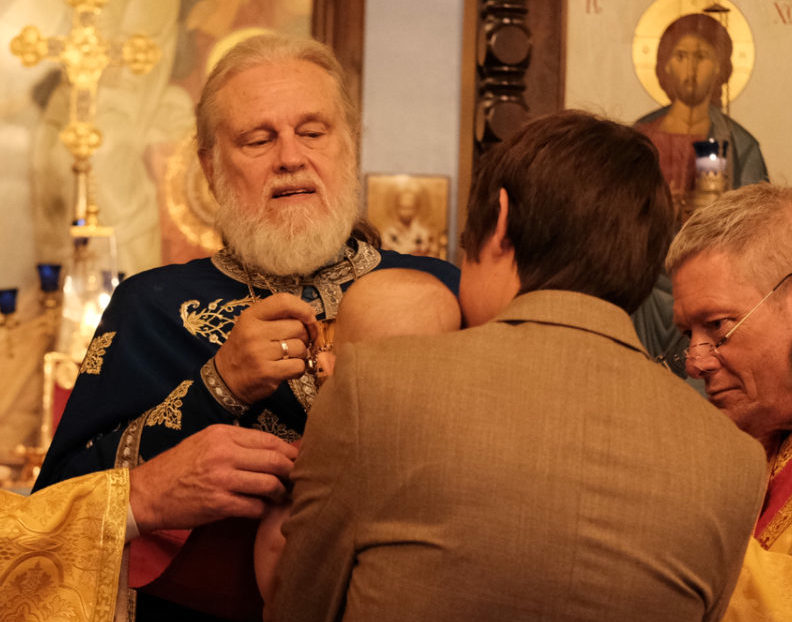
Christian Baptism is the mystery of starting anew, of dying to an old way of life and being born again into a new way of life in Christ, through His Body, the Church. In the Orthodox Church, baptism is “for the remission of sins” and for entrance into the Church; the person being baptized is cleansed of all sins and is united to Christ; through the waters of baptism he or she is mysteriously crucified and buried with Christ, and is raised with him to newness of life, having “put on” Christ (that is, having been clothed in Christ). The cleansing of sins includes the washing away of the ancestral sin.
• The Mystery of Chrismation
Chrismation is the holy mystery by which a baptized person is granted the gift of the Holy Spirit through anointing with oil. As baptism is a personal participation in the death and Resurrection of Christ, so chrismation is a personal participation in the coming of the Holy Spirit at Pentecost.
The Acts of the Apostles show us that a sort of confirmation was going on even in the early Church. As the Christian community expanded both numerically and geographically into many locations both within and outside of the Jewish world, the Apostles were soon not the only ones preaching the Gospel and Baptizing people into Christ. As Christianity began to grow, it was impossible for the Apostles to be everywhere to perform the Sacrament by laying on their hands, so they gave the authority to their successors to administer the Sacrament by anointing the baptized with Chrism (holy oil).
• The Mystery of Communion
Immediately after being baptized and chrismated into the Church, during the Divine Liturgy, the newly illumined Christian receives Communion for the first time.
Upon reception into the Church, the newly baptized Christian continues and works to increase their participation in the Church through the Mystical Life in Christ. Entering into the Holy Orthodox Church is not the end, but, in many ways, the beginning of the divine life we have been created for.
Q: Who do I get in touch with to join the Orthodox Church?
If you think you may be interested in joining the Orthodox Church, glory to God! We recommend attending a service or two and then arranging a time to speak with our Priest.
Church Etiquette
In the Orthodox Church there are numerous customs and traditions that are important parts of our worship. Some of these customs are universal to the Church, while some may vary from parish to parish, or cultural tradition. The following, adapted from Fr. Anthony Karbo of Holy Theophany Orthodox Church in Colorado Springs, CO, addresses questions most often asked by those new to the faith, and even those not so new…
Standing vs. Sitting
The traditional posture for prayer and worship in the Orthodox Church is to stand. In “Orthodox countries” there are usually no pews in the churches. Chairs or benches on the side walls are reserved for those who need them, i.e. the elderly, infirm and pregnant. In North America, some Orthodox faithful have introduced pews into their churches thus creating the artificial “need” to figure out when to sit and when to stand. Whether a church has few chairs or many, there are times when one should definitely stand: • The beginning of the service: “Blessed is the Kingdom…” • All Litanies—The Entrances: with the Gospel and later, the Chalice • Gospel Reading • The Creed, the Lord’s Prayer • The Anaphora beginning with “Let us stand aright” through the Hymn to the Theotokos • The distribution of Holy Communion, i.e. the Body and Blood of Christ in our midst, through the end of the dismissal As you can see, this leaves little time for sitting. Whatever parish you are in, when in doubt, stand in prayer—yet remaining sensitive to not drawing attention to oneself, or blocking other’s participation in the service.
Lighting Candles
Lighting candles is an important part of Orthodox worship. We light them as we pray, making an offering to accompany our prayers. Orthodox typically light candles upon entering the church, placing them in the candle stands when venerating the icons. If a service is already in progress, it is ok to light candles up to the reading of scripture. Once the Reader comes out carrying the Apostol (for reading the Epistle), it is a good idea to wait until after the service to light candles so and not distract others from prayer, nor draw undue attention to oneself.
This same approach is best when one arrives late to a service (which, by the way, is entirely inappropriate, without due cause, for a Christian who has come to worship God; the same goes for leaving services early).
Entering the Church
The Lord’s Day worship begins on Saturday evening with Great Vespers and includes Sunday morning Divine Liturgy. For all services, the proper time to arrive at church is well before the service is scheduled to begin, in order to pray and complete our preparations for worship. As is our custom always enter prayerfully and, when the time is proper, light candles and venerate the holy icons. We come to the church on time as if to a “Great Banquet,” with reverence because we are partaking of the very Body and Blood of Christ, our Savior. Coming to pray the Hours before the Divine Liturgy begins, will ensure that you will be settled in with plenty of time to pray without distraction
IF LATE…
Experience testifies that coming to Church late is more a matter of “habit” than circumstance: there are those who come late, and those who don’t. If arriving late, one should refrain from venerating icons in the front of the church once the Reader comes out of the Altar with the Apostol (for reading the Epistle), etc. for the same reason given under “Lighting Candles”.
A general ‘rule of thumb’: Those who arrive late should generally refrain from partaking of the Eucharist if one is not in services for the reading of Epistle and Gospel. However, what is far worse than coming late, is not coming at all! Always feel free to talk with the priest about unusual circumstances that will affect your participation in the fullness of Divine Services.
Whenever you come, early, on-time, or late, you should always come forward to venerate icons first. Let your focus be on showing love and respect to our Lord through proper entry into the Temple. Never just ‘slide into a row of chairs’, without first bowing before the Lord, crossing yourself, lighting a candle if you choose, and venerating the Holy Icons if you are able. Always ask if you wonder what to do… we have all been there.
In the event that arriving late is completely unavoidable, try to enter quietly and unobtrusively, observing what is happening. Remain in the Narthex if the Epistle or Gospel is being read, during the homily, during the Little and Great Entrances – These are NOT times to come & go, unless you are tending to little ones or an emergency. And NEVER enter or leave during the Anaphora (the prayers of consecration of the holy Mysteries).
Crossing One's Legs
In many cultures throughout the world, crossing one’s legs is taboo and considered very disrespectful. In North America there are no real taboos against such action, rather, we tend to cross our legs to get comfortable. Should we do so in church? No. Not because it is “wrong” for us ever to cross our legs, but because it is too casual—and too relaxed—for being in the presence of God. When we get settled in our favorite chair at home, we lean back, kick up our legs, and allow our minds to wander. Remember, sitting in church is a concession, not the norm of prayer. We should remain attentive (i.e.: “Let us attend”) at all times as a soldier prepared for (spiritual) battle before his Commander. Should we sit, we must do so attentively and not too comfortably that our minds not wander off the “one thing necessary.”
Leaving Church
The services are not over until the dismissal is proclaimed. The protocol is to leave the church only after the final blessing, and after venerating the cross held by the priest at the end of the Divine Liturgy or other service. As one leaves the Temple it is proper to turn, face the iconostas and bless yourself. After exiting the church building, it is customary to face the doors of the church, bow, and bless yourself before walking away.
If you need to leave early, please exit the church quietly and refrain from conversing until after you have exited so as not to disrupt others. It is not acceptable to be in the kitchen, or social hall at any time during Liturgy (For those providing hospitality, or other services in support of our worship, be present in the Nave for the scripture readings and homily, following the protocol for coming and going above.)
Sunday Dress
There was a time when people put on their “Sunday best” to go to church. By contrast, there is today not an insignificant backlash against such propriety. Many contemporary churches innocently flaunt a “come as you are” pitch as part of their advertising ploy. Though God does not demand us to “dress up” for Him (as though He is in any way impressed by our external appearance), the fact is, as followers of Christ in all areas of our life, we should offer Christ our “best” and not just our “leftovers” (c.f. Cain and Abel). Our dress should always, especially at church, be becoming of a Christian. We dress modestly, not in a flashy way that merely brings attention to ourselves.
Some Guidelines:
Children: Only young children are allowed to wear shorts to church – but not athletic shorts, cut-offs, or “spandex” (which are not appropriate for adults either). Tennis shoes that “light up” should be avoided, especially for altar servers, in that they draw attention away from prayer. “This Bud’s for you!” and other similar T-shirts with bold images and messaging are a definite out. Do not bring toys, coloring or other items that can attract other children, or distract those engaged in the Divine Services.
Women: Dresses are certainly most appropriate, and are to be modest (i.e. tank tops, short skirts, and skin-tight dresses are never appropriate, and serve only one purpose contrary to the aim of being in Church). Slacks and pant-suites are an accepted part of our culture, however tight jeans, ‘yoga pants’ and spandex-type wear are never appropriate. The wearing of head coverings is traditional and encouraged, but not enforced.
Men: Men are also to dress modestly as befits a follower of Christ. While coat and tie are by no means mandatory, shirts with collars and clean pants/slacks are not too much to ask. Again, particularly on Sunday morning, shorts, sleeveless or tight shirts, shirts with bold images or messaging are never appropriate. And jeans and tennis shoes should be avoided. For those who serve as greeters, at the cleros, or in the altar, long sleeve shirts and dress shoes are expected. Men do not wear any hats or headwear in church (with the exception of the liturgical headwear of some clergy).
The above guidelines can be adjusted for services outside of Divine Liturgy, i.e. Vespers. It is better to be in church for prayer, than to not come at all for mere lack of a change of clothes – as may be the case when coming from a Saturday outing, or work party, etc.
Finally, this is not a call for someone to go out and buy a whole new wardrobe just to be a part of the Church! Use your best judgment and good taste when it comes to Church. You don’t go to church to be seen by people – you go to present yourself before, and to worship, God.
A Word About Lipstick
Lipstick looks terrible smeared on icons, crosses, the communion spoon, and the priest’s or bishop’s hand. Hand-written icons have been ruined by lipstick; and even though the cross or spoon can usually be cleaned after everyone venerates, it’s not very considerate to those who follow. What is the answer? If one insists on wearing lipstick to church, blot your lips well before venerating…. Point of consideration: God, Whom we alone come before in Liturgy, is not impressed with our external attractiveness, but with the adorning of our souls in humility, good works, and piety.
Talking During Church
Besides being disrespectful toward God, Who is present, it is distracting for others who are striving to pray. This rule includes all services of the Church, whether it be the Hours read prior to Divine Liturgy, the Prayers being read while we come forward to venerate the cross after the Dismissal, or the priest hearing Confessions after Vespers. If you must speak to someone, at least move to the Narthex, but keep it to a minimum. It is best to save conversation for the fellowship hall, inviting guests downstairs for a visit.
Kiss (Don’t Shake) the Bishop’s and Priest’s Hand
The proper way to greet a bishop or priest is to ask his blessing and kiss his right hand. How do you do this? Approach the bishop or priest with your right hand over your left (palms up) and say “Father (“Master,” in the case of a bishop), bless.” This is appropriate and traditional, rather than shaking their hands.
When? At those same times you would generally greet with a “Hello, good to see you…” upon arrival, and a “Goodbye, see you soon…”, when you leave wishing God’s peace . It is never required, but is always welcome in the bonds of love within the Church. When you receive such a blessing it is Christ Himself who offers the blessing through the hand of the priest or bishop. Who of us would not want all of Christ’s blessings we can get?
Making the Sign of the Cross
A person looking around on a Sunday morning may notice that different people cross themselves at different times. To a certain extent, when to cross oneself is a matter of personal piety and not of dogma. However, there are times in the service when crossing oneself (thumb and first two fingers touching each other, third and fourth fingers folded into the palm: touching head first, to stomach, right shoulder to left) is called for:
⁃ To cross: when you hear one of the variations of the phrase “Father, Son, and Holy Spirit”; before venerating an icon, Gospel, or Cross; when blessed with an icon, Cross, Gospel, or Chalice; entering and exiting the temple; when passing before the Altar.
⁃ Not to Cross: (only bowing of the head): when blessed with hand (as in “Peace be unto all”), or censed. In receiving a blessing from a bishop or priest one does not make the sign of the Cross beforehand. “In this way ought we to distinguish between reverence toward holy things and toward persons” (Jordanville Prayerbook).
Snacks for Children
Parents often bring little snacks for young children to keep them occupied and quiet in church. This is fine as long as it is discreet and quiet and the parent sees to cleaning up any leftovers. By the time a child is 3-4 years old this will most likely be unnecessary. And by the time a child reaches age 7 they are mostly capable of fasting the entire morning of Holy Communion (or at least cutting back on breakfast). For those children who do require snacks during service, please refrain from feeding them, even a bottle, while in line for Communion, as they ought to come to the Holy Mysteries without food already in their mouths. Chewing gum is never appropriate in church.
Handling the Holy Bread (“Antidoron”)
After taking Communion, at the end of the Divine Liturgy, and at Vespers/Vigil with a “Litya” or “Blessing of Bread”, it is traditional to eat a piece of holy bread or antidoron—the left-over bread from which Holy Communion was prepared and various commemorations made. While antidoron is not the Body and Blood of Christ, it is still blessed bread, and as such, we should take precaution to eat it carefully so that crumbs don’t fall to be trampled underfoot. Monitor the children as they take the antidoron, teaching them to eat respectfully.
Final Thought
Our American culture of the 21st Century is very casual, even subtly anarchist, in its approach to life. Dress, music, language, values, morals, and entertainment all reflect a trend to “downgrade” life from what God intended it to be. We mustn’t allow this prevailing tendency to enter into our Christian piety, whether at home or at church. Most church etiquette is based on simple common sense and a respect for God and others. We are in church to worship God in Holy Trinity. The priest announces, “In the fear of God, with faith and love, draw near.” If we simply approach our lives and our worship together with this in mind, then we will be people of proper “church etiquette.”